


13 Nov How to Rekey Locks for Vacation Rental Turnover
Last Updated: November 12, 2026
Quick Summary
Rekey locks after every vacation rental turnover by changing the pins inside each cylinder so old keys stop working. The lock stays in place, and new keys go only to authorized people. Rekeying is usually quicker than replacement when the hardware is still sound.
- Rekey when the lock turns smoothly and the deadbolt is solid.
- Replace the lock if the cylinder is loose, sticky, cracked, or shows pry marks.
- Single-cylinder rekeys typically run $15 to $40 in labor and parts, plus a service charge.
- Rekey after the cleaner’s access ends so no one holds a live key.
- Keep a turnover log of rekey dates, key counts, and who holds each key.
Table of Contents
- Why Rekeying Matters at Every Vacation Rental Turnover
- Rekey or Replace Rental Locks: A Decision Tree
- How Much Does Rekeying a Rental Property Cost?
- Rekeying Between Tenants and Guests: The Turnover Workflow
- Vacation Rental Key Management and Documentation
- Local Rules and Landlord Responsibilities to Check First
- Booking Your Next Rekey Before the Next Guest Arrives
- Frequently Asked Questions
Why Rekeying Matters at Every Vacation Rental Turnover
Every guest who leaves your rental still has a key, and that key still opens your door. Rekeying locks after each turnover closes that gap. A lost or copied key is all it takes to open the property to someone unauthorized.
Rekeying changes the pins inside a lock cylinder so that old keys no longer work. The lock itself stays in place. A new key set then goes only to the people who should have access.
The risk goes beyond guests. Cleaners, maintenance workers, and former property managers may all hold keys. A National Crime Prevention Council home security guidance stresses that controlling who holds keys is one of the simplest ways to protect a home.
WATCH OUT: Do not assume a lock is secure because it looks fine. A worn or loose lock can often be opened with little effort even when the key is no longer in circulation.
Rekey or Replace Rental Locks: A Decision Tree
Rekeying and replacing are different jobs. Rekeying is generally the quicker option when the hardware is sound. Replacement makes sense when the lock itself is worn, damaged, or outdated.
Start with these questions:
- Does the lock turn smoothly with no grinding or looseness?
- Is the deadbolt solid when you push on the door?
- Is the lock brand and model still in good working order?
- Do you need a different type of lock, such as a smart lock?
If most answers are yes, rekeying is usually enough. If you answer no to several, replacement is likely the better call.
When a rekey is enough
Rekeying works well when the hardware is in good shape. Typical signs include:
- A smooth, tight lock with no play in the cylinder
- Hardware that has been well maintained
- A need only to cut off access to old keys
Rekeying keeps the same door and lock body, so it is usually the quicker job.
When replacement is the better call
Replace the lock when you see:
- A cylinder that is loose, sticky, or hard to turn
- Visible damage, cracks, or pry marks
- Hardware that cannot hold a secure deadbolt
- A lock that is so old that parts are no longer available
How Much Does Rekeying a Rental Property Cost?
Rekeying a vacation rental is usually priced per cylinder, plus a service-call or trip charge. In most markets, a single-cylinder rekey runs roughly $15 to $40 in labor and parts when bundled into a service visit, and a standard service call adds about $50 to $100 on top. A typical one-bedroom unit with two exterior locks (knob and deadbolt) commonly lands in the $100 to $200 range for a single visit; a multi-door property with four to six cylinders can run $200 to $400. These are planning ranges, not quotes, always confirm the trip charge, per-cylinder rate, and whether hardware replacement is extra before booking.
What drives the price:
- Number of cylinders. Each lock cylinder is a separate line item. A property with a front door, back door, and garage entry has three cylinders minimum.
- Service call versus on-site visit. A standalone trip for one lock costs more per lock than bundling rekeys across several units in one visit.
- Hardware condition. A sticky or damaged cylinder may need replacement, which pushes the job from rekey pricing into replacement pricing.
- Key quantity. Extra cut keys are usually a few dollars each; plan for one key per authorized person plus two spares.
- Smart-lock credential reset. If a locksmith also resets codes and removes users, expect an added labor charge.
DIY versus professional. DIY rekey kits are available from retailers and work on some common residential cylinders. They make sense for a single simple lock in good condition. They do not make sense for high-security cylinders, multiple doors that must be keyed alike, or any lock showing wear, a mis-set pin can leave you locked out or with a cylinder that fails under force.
Multi-property cost planning. The per-visit model rewards batching. If you manage several units, schedule rekeys in one route so the trip charge is spread across properties. Over a season of repeated turnovers, the cumulative cost of professional rekeys is worth comparing against the cost of a smart lock. Review your own annual spend against the price of smart-lock hardware, batteries and connectivity before choosing a path. Keep every invoice, records of what you paid and when you rekeyed are useful if a deposit or damage dispute arises.
Typical single-cylinder rekey cost in labor and parts
Rekeying Between Tenants and Guests: The Turnover Workflow
The workflow below is written for a same-day turnover gap, not the multi-day window a long-term lease allows.
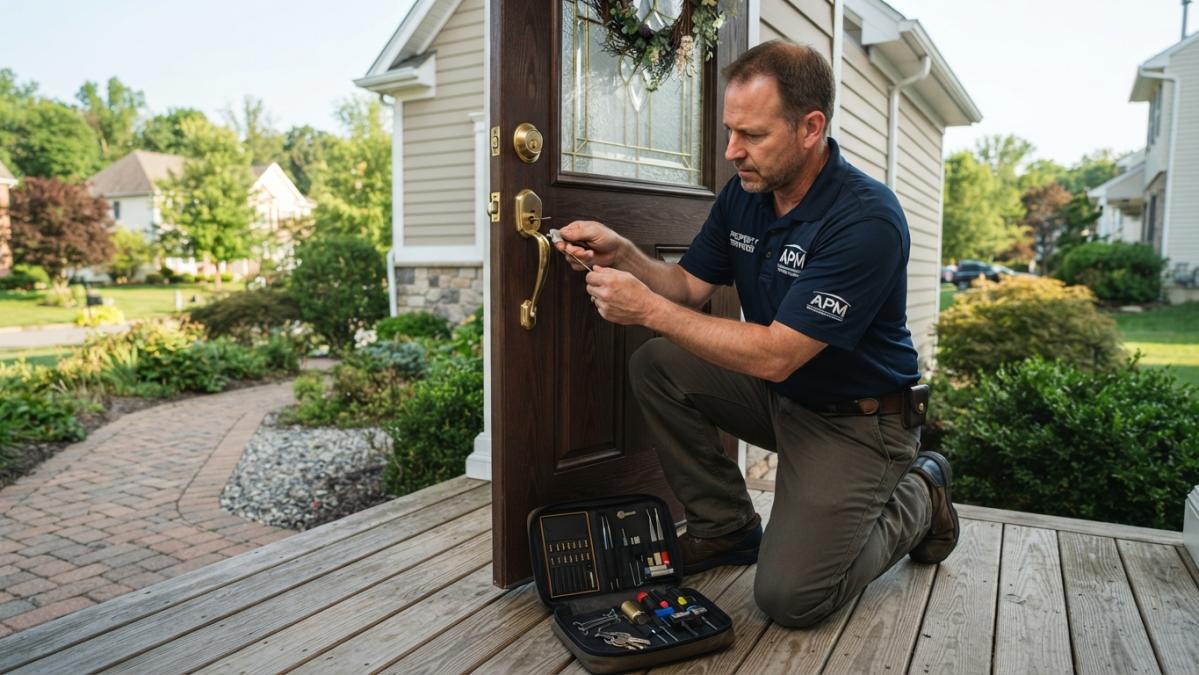
Same-day turnover sequence
- Checkout (10-11 a.m.). Confirm the guest has departed and collect every physical key, fob, and access card. Count them against the number issued at check-in.
- Inspection (promptly after checkout). Walk every exterior door. Test each lock by turning the key and by pushing on the door with the deadbolt engaged. Note looseness, grinding, or pry marks.
- Rekey or rotate (late morning). Rekey physical cylinders or, on smart locks, delete the departing guest’s code and issue the incoming guest’s code. Do this before cleaning staff arrive so no one holds a live credential they should not.
- Verify (before cleaning finishes). Test the new key or code from outside, lock and unlock twice, and confirm old keys or codes no longer work.
- Issue and log (before check-in). Give new keys only to the incoming guest and authorized staff. Record the date, the cylinder or lock ID, who received each key, and the code change time.
- Final walk (shortly before check-in). Confirm the door self-locks, the deadbolt throws fully, and no spare key is left in a lockbox the guest can guess.
Watch out: Do not rekey while a cleaner or contractor still holds an old key, sequence the rekey after their access ends, or reissue their key in the same visit.
Smart-lock code rotation and account access. Smart locks replace the physical rekey with a credential rotation, and the account layer matters as much as the code. Between every stay: delete the departing guest’s code, set a new time-limited code for the incoming guest, and review the user list for anyone who should no longer have access. Change the administrator password if it was ever shared with a cleaner, co-host, or property manager, and check the access log for entries outside the booking window. A shared login is a live key, treat it like one.
Documentation for the next guest. Keep a turnover log per property: lock ID, last rekey or code-rotation date, key count and holders, staff and contractor access status, and a sign-off that the final walk passed. This log is what lets you prove the property was secured before the next arrival if a question ever comes up.
The turnover sequence below breaks the same-day rekey process into steps, each with its timing.
| Step | What to do | Timing |
|---|---|---|
| Checkout | Collect every key, fob and access card and count them | 10-11 a.m. |
| Inspection | Test each exterior lock and note looseness or pry marks | Promptly after checkout |
| Rekey or rotate | Rekey cylinders or rotate smart-lock codes | Late morning, before cleaners arrive |
| Verify | Test new key or code and confirm old ones fail | Before cleaning finishes |
| Issue and log | Give keys only to incoming guest and authorized staff | Before check-in |
| Final walk | Confirm the door self-locks and the deadbolt throws fully | Shortly before check-in |
Vacation Rental Key Management and Documentation
Good records make turnover easier. Keep a simple log that includes:
- The date each lock was last rekeyed
- The number of keys made and who holds each one
- Any access codes and when they were changed
- Notes on lock condition and repairs
A written log also helps if a key goes missing. You will know exactly which keys to replace.
Store spare keys in a secure location away from guest access. Avoid hiding keys under mats or in planters, since those spots are easy to find.
Local Rules and Landlord Responsibilities to Check First
Rules for rentals differ by state, county, and city. Before you rekey or change locks, check your local short-term rental rules and any lease or management agreement that covers who pays for lock work. A local housing authority or licensed attorney can explain what applies to your property.
Keep records of when you rekeyed and what you paid. These records can matter if a dispute comes up later.
Booking Your Next Rekey Before the Next Guest Arrives
Plan rekeying as part of every turnover, not as an emergency fix. Schedule the job right after checkout so the property is secure before new guests arrive. If you have a broken key or are locked out now, call Accurate Locksmith. book a rekey appointment
For step-by-step guidance on handling a broken key, read our guide to broken house key emergencies. It walks through getting access safely and deciding whether to rekey or replace.
Protecting your rental starts with knowing exactly who can open your doors. Accurate Locksmith has served Bucks County, PA, and Mercer County, NJ for over 30 years, and our licensed, bonded, and insured technicians handle rekeys and lock replacements for rental properties. Call us to schedule your next turnover rekey.
Frequently Asked Questions
Is it cheaper to rekey locks or replace them?
A rekey changes the internal pins so the existing hardware accepts a new key, which keeps the lock body, handle and deadbolt in place. Replacement means buying new hardware and paying for installation on each door. Pricing varies with the number of cylinders, the lock brand and whether the service is booked as an emergency. For a current quote on your property, contact Accurate Locksmith directly or check its website.
What locks cannot be rekeyed?
Some locks cannot be rekeyed, including many older or low-cost cylinders with non-standard designs, most keyless and smart locks that rely on electronic credentials, and locks whose cylinders are damaged or worn beyond repair. A locksmith can inspect the lock and confirm whether a rekey is possible or whether replacement is the better option.
Should vacation rental locks be rekeyed between every guest?
Rekeying or rotating access after each turnover is one approach property managers use, especially when physical keys have been handed to several people. At minimum, change smart-lock access codes between guests and remove any credentials that belong to former visitors. Rekey when a key is lost, when a guest had unusual access, or when you cannot account for every copy of a key. Keep a record of each change so you can show what was done and when.
How do you manage keys during a vacation rental turnover?
Collect every physical key and remove or deactivate old smart-lock codes before the next guest checks in. Rekey or re-code the locks if any key is unaccounted for. Issue new keys or codes only to the incoming guest, and log who received what. Keep a single key-control sheet listing each lock, each key holder and the date of the last change, so the turnover process is repeatable across multiple properties.

No Comments